29.07.2026
Clean Label Bread: What a Bread Without Additives or Preservatives Really Means
What Clean Label Means
"Clean Label" describes a product whose ingredient list is brief, understandable, and free from additives that the end customer would associate with ultra-processed foods. There is no single legal definition or regulated logo certifying it: it is a product approach adopted by the manufacturer that the buyer must verify by reviewing the technical data sheet.
In practice, a Clean Label bread typically meets several of these criteria:
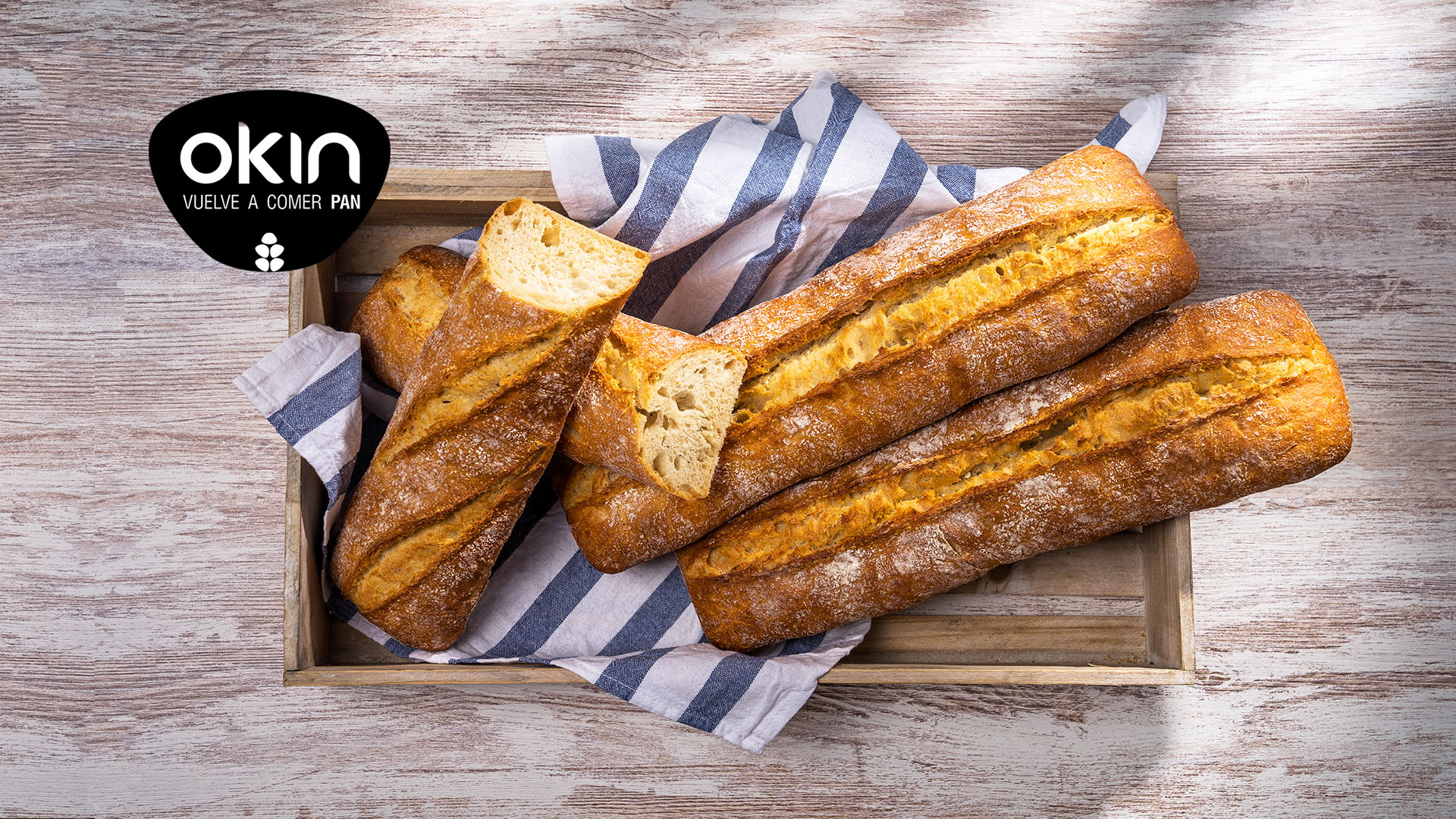
-A short, recognizable ingredient list (flour, water, salt, yeast or sourdough).
-No added preservatives (e.g., propionates or sorbates).
-No chemical improvers or emulsifiers.
-No artificial flavorings or colorings.
-Processes that replace chemistry with technique: longer fermentations, sourdough, high-quality flours.
The key lies in the final point. Dispensing with additives requires compensating through craftsmanship: proper fermentation times, temperature control, and quality raw materials. That is why Clean Label bread is, above all, a matter of process—not just a label.
What HORECA Businesses Look For in Clean Label Products
In the hospitality sector, the demand for clean labeling stems from a shift in the end consumer: more and more diners read labels, ask about ingredients, and value "natural" foods. A HORECA purchasing manager looks for several specific qualities in these products:
-Alignment with the establishment's concept. A restaurant showcasing product-driven cuisine needs bread that aligns with that message.
-Managing allergens and intolerances. Fewer additives make it easier to explain the composition and reduce problematic ingredients.
-Transparency for diners. Being able to say, "This is bread without preservatives or additives," is a strong sales argument on the floor.
-Consistency of service. Bread must maintain uniform quality with every delivery, without relying on the skill of an on-site baker at each location.
Par-baked frozen bread fits this demand well when properly formulated: it allows businesses to serve freshly baked bread free of additives or preservatives because freezing—not chemistry—is what preserves the product until the final bake. In daily service, this format allows staff to bake only the bread needed at any given time, maintaining consistent quality.
The Difference Between "Additive-Free," "Preservative-Free," and "Natural"
These terms are often used as synonyms, but they do not mean the same thing. It helps to start with a baseline: a food additive is a substance added for a technological purpose (preserving, emulsifying, coloring...) whose use is regulated at the European level by Regulation (EC) No 1333/2008, which sets the list of authorized additives and their conditions of use. With that in mind, it is important to distinguish between these three terms before making a buying decision:
| Term | What it implies | What it does not guarantee |
| Additive-free | Contains no added substances from the official additive list (E-numbers): preservatives, emulsifiers, colorings, improvers. | That the flour or raw materials are organic or of a specific grade. |
| Preservative-free | Contains no preservatives designed to artificially extend shelf life. May contain other additives (e.g., an emulsifier). | That it is free from other types of additives. |
| Natural | A generic, loosely regulated term in baking; usually implies "minimally processed." | Nothing on its own: it is the most ambiguous term and requires strict verification on the data sheet. |
The practical takeaway: "Preservative-free" is more specific than "natural," and "additive-free" is the most demanding criterion of the three. "Additive-free" refers to the absence of substances on the Regulation (EC) No 1333/2008 list; "preservative-free" only restricts the specific family of additives that prolong shelf life; and "natural" is unregulated for bread (for instance, Spanish bread quality standards—Royal Decree 308/2019—regulate terms like "whole wheat" or "sourdough bread," but do not define or protect the use of "natural").
Because of this, none of the three terms equals "organic." Bread can only be sold as organic if certified under Regulation (EU) 2018/848; the absence of additives alone does not make a product organic. If a product is presented simply as "natural," always ask for the full ingredient list.
Why It Matters in Professional Baking
For a hospitality business or distributor, working with Clean Label bread has implications that go beyond marketing:
-Reputation. A clean label reinforces the positioning of venues committed to quality ingredients and transparency.
-Front-of-house & sales. Staff can describe the bread with confidence when guests ask about ingredients.
-Reduced risk of being perceived as ultra-processed. A short ingredient list conveys artisanal quality, even in a well-made industrial format.
-Alignment with regulatory and consumer trends. Pressure surrounding additives and interest in natural products continue to grow.
An important nuance is that a clean label cannot be sustained by marketing alone: it requires a rigorous process behind it. It is essential to evaluate manufacturers carefully—reviewing their processes, raw materials, and delivery consistency—before entrusting them with your supply.
What to Review in a Technical Data Sheet
Commercial packaging says little; the technical data sheet says everything. Before accepting a bread as Clean Label, check these points:
-Complete ingredient list. The shorter and more recognizable, the better. Be wary of long lists featuring multiple E-numbers.
-Presence of preservatives. Look for propionates (E-280 to E-283), sorbates (E-200 to E-203), or others. Their absence signals a Clean Label product.
-Improvers and emulsifiers. Check for emulsifiers (e.g., E-471) or dough conditioners. Additive-free bread typically avoids them.
-Preservation method. For par-baked frozen bread, freezing should preserve the product, not a chemical preservative.
-Allergens. They must be clearly listed (gluten and potential trace allergens).
-Use of sourdough or long fermentations. These usually indicate an approach that replaces additives with craft technique.
In addition to the product sheet, review the manufacturer's quality framework. Look for food safety certifications (such as IFS, BRC, or ISO 22000) which, while not equivalent to "Clean Label," demonstrate strong process control. This is an industry criterion buyers should verify on a case-by-case basis.
How to Communicate It to the End Customer
Offering Clean Label bread only adds value if communicated clearly and without exaggeration. Here are a few guidelines:
-Be precise. Say exactly what it is: "bread with no added additives or preservatives," not "100% natural" unless you can back it up.
-Don't confuse terms. Do not present preservative-free bread as "organic" unless it is certified.
-Train front-of-house staff. The team should know what the bread contains—and what it doesn't.
-Support it on the menu. A concise, honest mention ("artisan bread without preservatives") carries more weight than an over-the-top claim.
-Keep documentation. Store technical data sheets to support your claims before guests or health inspections.
Transparency—rather than exaggerated promises—is what turns clean labeling into a credible selling point.
Frequently Asked Questions (FAQ)
Is Clean Label the same as organic?
No. Clean Label refers to a short ingredient list free of artificial additives, whereas "organic" is a regulated category requiring certification under Regulation (EU) 2018/848. A bread can be Clean Label without being organic.
Does bread without preservatives have a shorter shelf life?
In fresh bread, the absence of preservatives usually shortens shelf life. In par-baked frozen bread, this is not an issue because freezing—rather than chemical preservatives—preserves the product until the final bake.
Is there an official seal certifying "Clean Label"?
There is no single regulated logo guaranteeing the term. It is a product philosophy, so verification falls on the buyer: reviewing the technical data sheet and ingredient list is essential.
Can industrial bread be Clean Label?
Yes. Large-scale production does not preclude a clean label if the manufacturer replaces additives with high-quality raw materials, proper fermentation, and process control. The formulation—not the scale of production—is what determines it.
About OKIN
As a brand of Artadi Alimentación, S.L., OKIN specializes in professional baking with a focus on par-baked frozen bread, HORECA formats, and a Clean Label philosophy: bread without additives or preservatives, crafted in Zumaia (Gipuzkoa) for the food service and food distribution channels. This commitment is captured in their claim "Clean Label, Clean Company."
To see how this approach translates into products, explore the available product families in OKIN's bread selection or reach out to their team with any technical questions regarding data sheets and ingredients.