09.07.2026
Guide to Pre-Baked Frozen Bread
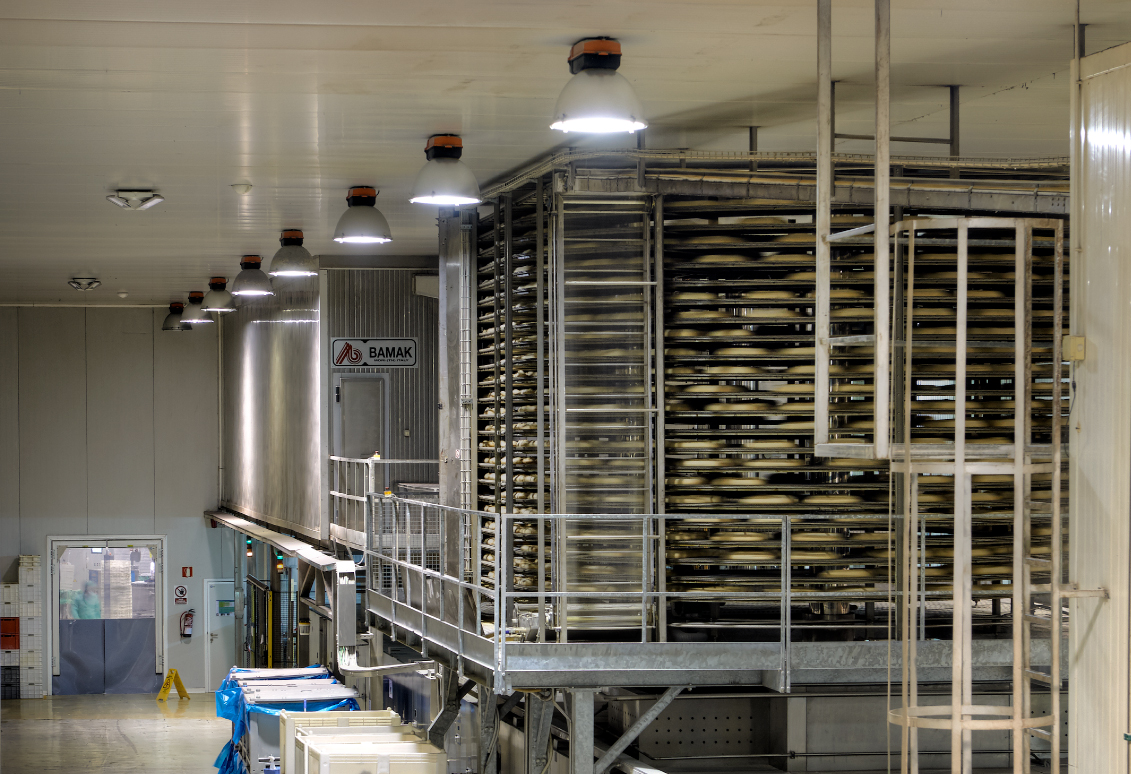
Pre-baked frozen bread is bread that is partially baked at the factory, frozen, and then finished baking at the point of sale or service just before consumption. For the HORECA channel (hotels, restaurants, bars, cafes, and catering), it is a formula that combines freshly baked bread with operational control: each establishment decides how much bread to bake and when, without depending on its own bakery or rigid daily deliveries. This guide explains what it is, how it is produced, how it differs from other options, and what criteria to use when choosing a supplier.
What is Pre-Baked Frozen Bread
Pre-baked frozen bread is a bread dough that goes through kneading, shaping, fermentation, and an initial partial baking: at this stage, the crumb structure is already set, but the crust has not yet developed color or crispiness. The piece is cooled, quickly frozen, and then distributed and stored in cold storage. At the establishment, only one step remains: baking for a few minutes to complete the cooking process. The result is hot bread with a crispy crust and tender crumb, ready to be served immediately. It is a format designed for operations where bread is consumed throughout the day and in variable quantities.
How it is Made and at Which Point it is Frozen
The process follows the same phases as traditional bread up to the baking stage, adding two stages specific to the frozen format:
Kneading: Flour, water, salt, yeast, and, depending on the recipe, sourdough are mixed. This phase defines hydration and structure.
Shaping: The dough is divided and shaped into each piece (baguette, ciabatta, roll, loaf, etc.).
Fermentation: The dough rests and ferments to develop volume, alveolation, and aroma. Long fermentations provide more flavor and better digestibility.
Partial Baking: Here lies the key to the format. The piece is baked only until the crumb is set, stopping before the crust turns golden.
Cooling and Quick Freezing: The product's temperature is quickly lowered to preserve texture and prevent the formation of large ice crystals that would damage the crumb.
Cold Storage and Distribution: The bread is kept frozen until use.
The freezing point—after partial baking—is what distinguishes this product from raw frozen dough, which is frozen before fermentation and baking. With pre-baked bread, much of the technical work is already done, making the finishing process in the establishment faster and more consistent.
Difference Between Fresh Bread, Frozen Dough, and Pre-Baked Frozen Bread
It is important not to confuse three categories that are sometimes mixed up. Fresh bread arrives fully baked and only needs to be served, but it forces the business to guess the exact daily order and generates waste if there are leftovers. Raw frozen dough must be fermented and fully baked on-site: it gives maximum artisanal control but requires space, fermentation time, and expert hands. Pre-baked frozen bread sits in the middle: it arrives partially baked and frozen, finishing in just a few minutes in the oven, combining freshly finished bread with simple operations.
Advantages for HORECA
For a hospitality business, the advantages of pre-baked frozen bread are concentrated in four operational areas:
-
Speed and Simplicity of Service: Finishing the baking process takes just a few minutes in the oven, without the need for a bakery workshop or a baker. Any team member can bake batches according to service demand.
-
Waste Control: By baking only what is needed at any given moment, the bread that is not baked remains frozen and available. This reduces leftover bread that ends up being discarded, one of the most common wastes in hospitality.
-
Availability and Planning: Frozen stock has a long shelf life and does not depend on daily deliveries. It allows businesses to handle demand spikes, weekends, and high season without running out of product or overbuying.
-
Consistent Quality: Since the dough is prepared and pre-baked in the factory under controlled conditions, every piece comes out identical. A hotel with multiple service points or a restaurant chain gets the same bread across all locations, something difficult to guarantee with manual workshops.
In addition to these operational advantages, there is flexibility in assortment: a single supplier can cover breakfast, lunch, and the main menu with different types of bread without multiplying vendors.
What Formats are Used in Catering
The format of the bread determines the service, portion size, and cost. In HORECA, several formats coexist: individual rolls and pastries (hotel breakfasts, buffets, controlled portions, and sandwiches), baguettes and loaves (table bread in restaurants and bars, and sandwich bases), ciabattas and rustic breads (toasts and menus with character), large loaves and sliced breads (shared tables and boards), and specialty breads—whole wheat, with cereals and seeds, or adapted to dietary needs. The choice depends on the type of service, ticket size, and the logistics of each establishment, and a wide menu usually combines several formats.
What Clean Label Means
Clean Label describes a product formulated with recognizable ingredients and a list that is as short as possible, avoiding unnecessary additives and preservatives—substances whose use in the EU is regulated by Regulation (EC) 1333/2008. It is not an official stamp or a regulated certification, but a formulation approach that brings industrial bread closer to traditional bakery recipes (flour, water, salt, yeast, and, where appropriate, sourdough). For HORECA, this translates into a more transparent menu for diners who are increasingly attentive to ingredients, a bread flavor closer to artisanal, and fewer elements to justify in the technical data sheet. OKIN works with this philosophy: bread without additives or preservatives.
How to Choose a Supplier
Choosing a manufacturer of pre-baked frozen bread goes beyond the price per piece. It is advisable to review the formulation (ask for the technical data sheet: fewer additives and careful fermentations usually indicate higher quality), product consistency batch after batch (request samples and bake them under your real kitchen conditions), range of products to cover the entire service with a single partner, and logistics and cold chain (delivery frequency, minimum order quantities, and guaranteed temperature during transport). A separate chapter belongs to certifications: a serious manufacturer accredits its standards through third-party schemes such as IFS or ISO for food safety and management systems, organic certification according to Regulation (EU) 2018/848, or labels like V-Label; not everyone has them, so ask and verify which ones each supplier possesses and what they accredit. OKIN, for example, has certifications such as IFS and ISO, as reflected on its customer commitment website. When you are ready to evaluate specific options, you can explore the bread families available in "Choose your bread".
Frequently Asked Questions
Is pre-baked frozen bread of lower quality than fresh bread?
Not necessarily. Quality depends on the formulation and the process, not on the fact of freezing. A well-made, pre-baked, and quickly frozen bread retains its texture and, when finished on the spot, is served freshly baked. Controlled freezing preserves the crumb.
How long does it take to bake on-site?
Depending on the format and the oven, the final baking usually takes between a few minutes and approximately a quarter of an hour. Each manufacturer indicates the recommended temperature and time for each piece in its technical data sheet.
Do I need a special oven?
A professional bakery setup is not necessary. A standard convection oven, common in professional kitchens, is sufficient. The advantage over raw dough is that no fermentation chamber or baking expertise is required.
Does pre-baked frozen bread allow offering organic bread?
Yes, provided the product is certified as organic in accordance with Regulation (EU) 2018/848. Only bread that carries this certification can be sold and advertised as organic.
Does it work the same for a hotel, a restaurant, or a distributor?
The format adapts to each channel: buffets and breakfasts in hotels, table bread and sandwiches in restaurants and bars, and a wide assortment with a long shelf life for distributors. What changes is the range and logistics, not the principle of finishing the bread at the point of service.
About OKIN
OKIN, a brand of Artadi Alimentación, S.L., is a pre-baked frozen bread manufacturer based in Zumaia (Gipuzkoa), specializing in Clean Label solutions—bread without additives or preservatives—for hospitality, catering, and food distribution. As a family business with a history in professional baking, it develops product families for each type of service: Efi, Rústikos, Premiere, Zereal+, Gourmet, Koskor, Gastro, Eko, Akua, Integral, and Frizzante. If you want to see which bread fits your business, you can learn about OKIN's bread solutions for HORECA or contact the team.