22.07.2026
How to Choose a HORECA Bread Supplier
How to Choose a Bread Supplier for Restaurants, Hotels, and Cafés
Choosing a bread supplier isn't just about comparing unit prices: it's about deciding the reliability, consistency, and margin with which you will run every service. The right bread supplier for the HORECA sector is one that combines consistent quality, stable supply capacity, a wide variety of formats, and documented traceability—turning bread from an operational headache into a seamless asset. This guide covers the objective criteria every food service purchasing manager should review before signing a contract.
Why Your Bread Supplier Impacts Service
Bread is one of the few items served to virtually every table and at almost every breakfast. A stockout, an inconsistent batch, or a format that doesn't fit your service style is immediately noticed by guests.
A reliable supplier simultaneously mitigates three operational risks: running out of product during peak demand, serving a different bread every week, and accumulating food waste due to wrong sizing or quantities. Purchasing bread should therefore be treated as a service-driven decision, not just a cost calculation. Part-baked frozen bread, for instance, allows you to bake only what you need, an essential factor to keep in mind when evaluating providers.
Consistent Quality
Anyone can achieve good quality once. Delivering consistent quality, batch after batch, is what sets a professional supplier apart.
Ask how product uniformity is controlled: weight, crumb structure, crust, color, and oven behavior should be fully reproducible. Request samples from multiple batches—not just a single package—and test the bread under your actual baking and service conditions. A good supplier also provides clear baking instructions for each SKU, as final product quality depends heavily on proper preparation.
Formulation is another key quality indicator. Bread with a "Clean Label"—free from artificial additives and preservatives—typically reflects a higher-standard manufacturing process, which is worth considering when comparing options.
Supply Capacity & Logistics
A supplier may offer an outstanding product but still fail you if they lack logistical muscle. Supply capability is just as crucial as the recipe itself.
Evaluate the following before making a commitment:
-Delivery Frequency & Reliability: How often they deliver and their actual on-time fulfillment rate.
-Peak Season Coverage: How they handle high demand during peak seasons, holidays, or special events.
-Safety Stock & Lead Times: What happens if you experience a sudden surge in demand.
-Cold Chain Maintenance: For frozen bread, an unbroken cold chain during transit is non-negotiable.
-Minimum Order Quantities (MOQs) & Terms: Ensuring requirements fit your storage volume without forcing overstocking.
For a high-volume hotel breakfast or a busy restaurant with tight service windows, supply stability often matters far more than saving a few cents per piece.
Variety of Formats
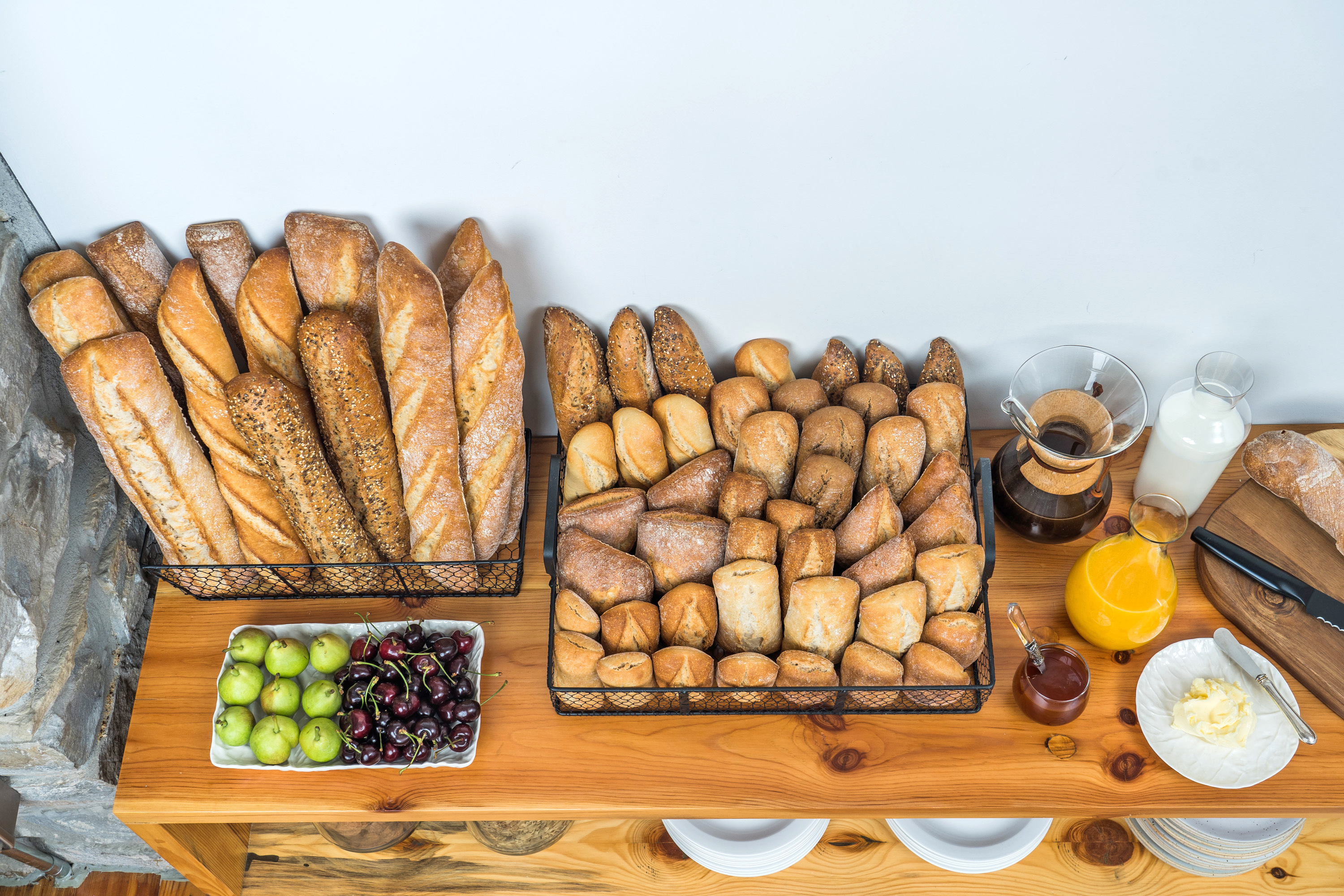
A single venue usually requires multiple bread formats: baguettes for dinner service, rolls for breakfast, individual portions for catering, rustic loaves for main menus, or specialty rolls for bars. A supplier with a comprehensive catalog allows you to consolidate purchases and maintain uniform quality across all offerings.
Assess whether the supplier covers the exact categories you use and whether they can support you when updating your menu or concept. Choosing correctly here prevents the need to manage multiple suppliers simultaneously.
Waste Management & Cost Control
Bread waste is a hidden cost: over-baked bread dries out, gets thrown away, or is served under suboptimal conditions. The supply format directly influences waste levels.
Part-baked frozen bread makes it easy to bake in small batches on demand, significantly reducing surplus compared to fresh bread delivered in bulk. When comparing suppliers, look for formats that enable portion control and bake-on-demand practices, and calculate the true cost of waste—not just the initial purchase price.
Technical Data Sheets and Traceability
A professional supplier provides comprehensive documentation for every reference. This is a management requirement, not an optional extra.
At a minimum, demand:
-Technical Data Sheet (TDS) detailing ingredients, allergens, weight, storage requirements, and baking guidelines.
-Clear, Up-to-Date Allergen Information required to comply with consumer transparency regulations.
-Batch Traceability: The ability to trace the origin of any product in the event of a quality issue.
-Shelf-Life Data: Storage temperatures, expiration dates, and post-bake shelf life.
If a supplier hesitates or fails to deliver complete documentation, consider it a red flag regarding their internal quality control.
Certifications
Certifications prove that a manufacturer meets food safety and process standards without requiring you to conduct an independent audit. Key industry certifications to look for include:
-IFS Food & BRCGS: Global food safety standards widely recognized in distribution.
-Organic Certification: Mandatory for selling bread labeled as organic under Regulation (EU) 2018/848; without it, organic claims cannot legally be made.
Always ask for a valid copy of the certificate and check its scope rather than relying on verbal assurances.
Sustainability
Sustainability plays an increasingly important role in HORECA purchasing decisions, driven by both corporate responsibility and customer expectations. Approach this criterion with data rather than marketing claims.
Evaluate suppliers based on verifiable indicators: waste management programs, logistics efficiency, eco-friendly packaging, and published environmental metrics. Always request concrete evidence before factoring sustainability into your final decision.
Questions to Ask Before Choosing a Supplier
Before signing an agreement, ask the sales representative or manufacturer the following:
-How frequently do you deliver, and what is your actual order fulfillment rate?
-How do you ensure batch-to-batch consistency, and may I test samples from different lots?
-What formats do you offer, and can you accommodate menu changes?
-Will you provide technical data sheets, allergen declarations, and batch traceability for all items?
-What active certifications do you hold, and what is their scope?
-How do you handle demand spikes or sudden supply disruptions?
-What solutions do you offer to help minimize bread waste in my specific operation?
The answers to these questions will reveal far more than a sales brochure.
Frequently Asked Questions (FAQ)
What is the most critical factor when choosing a bread supplier for food service?
The combination of consistent quality and supply reliability. An exceptional product that arrives late or varies from batch to batch creates far more operational issues than a minor price discount can offset.
Is frozen bread inferior to fresh bread from a local supplier?
Not necessarily. Part-baked frozen bread enables bake-on-demand operations, reduces waste, and guarantees uniform quality. The difference lies in the process and final baking execution, not in the frozen format itself.
What documentation should I require from my bread supplier?
At minimum: technical data sheets with ingredient and baking specs, clear allergen information, storage instructions, and batch traceability data.
Can I market bread from any supplier as organic?
No. Only bread certified under Regulation (EU) 2018/848 can be legally marketed as organic. Always verify the supplier’s active organic certificate beforehand.
About OKIN
In the professional channel, manufacturers like OKIN help restaurants, hotels, and distributors maintain a consistent, flexible bread offering tailored to every service model. OKIN, a brand of Artadi Alimentación, S.L., is a manufacturer of part-baked frozen bread based in Zumaia (Gipuzkoa, Spain). Specialized in Clean Label solutions—free from additives and preservatives—for the HORECA and food distribution sectors, its product ranges include Efi, Rústikos, Premiere, Gourmet, Koskor, and Eko.
If you are evaluating suppliers, explore their HORECA range or contact the OKIN team to request technical data sheets, samples, and personalized advice on the best formats for your business.