15.09.2026
Rustic Bread for Foodservice
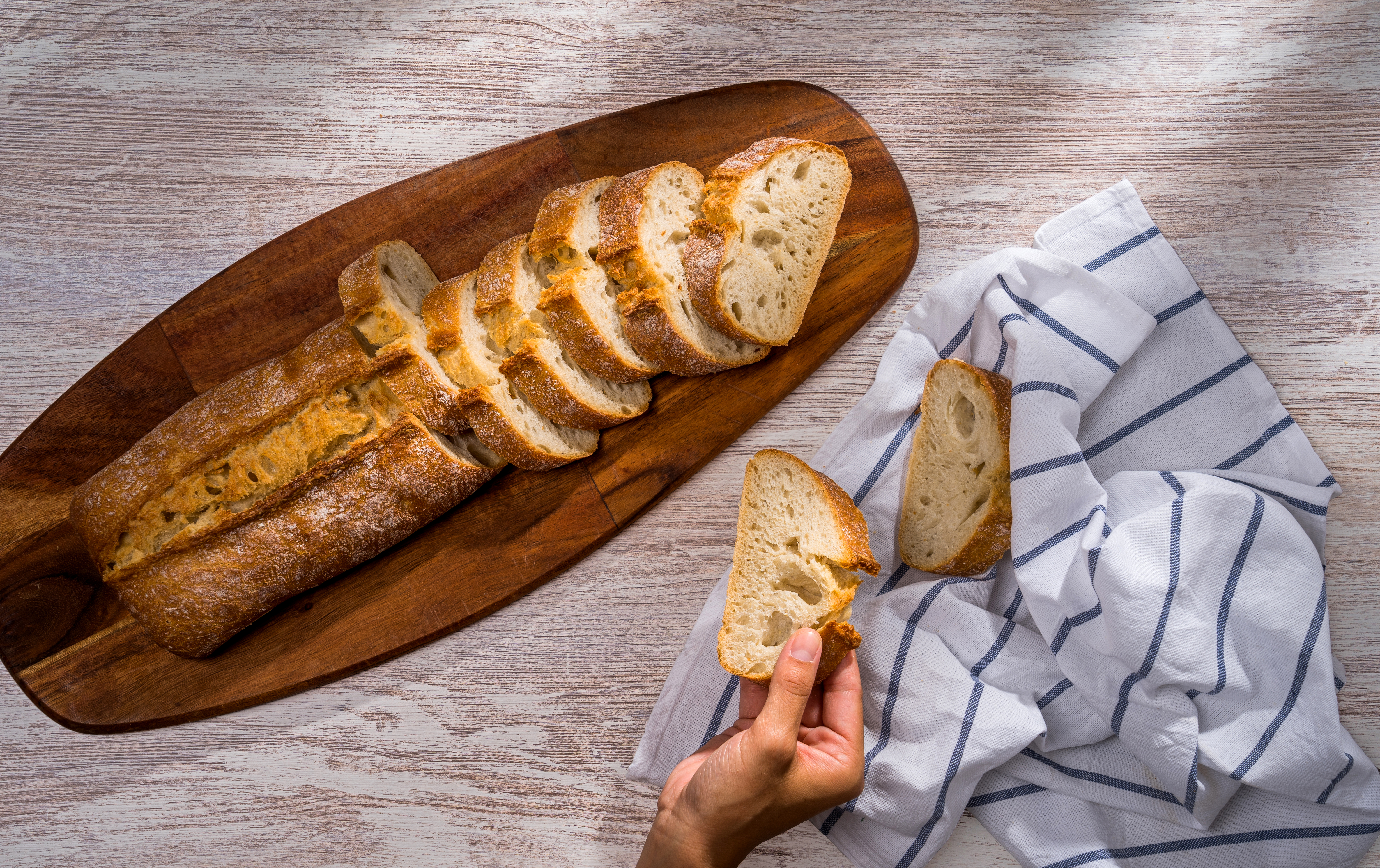
Rustic Bread for Foodservice: Characteristics, Uses and Advantages
Rustic bread is a category of bread with a thick, crunchy crust, a moist, open crumb and a pronounced flavour, associated with hydrated doughs and long fermentations. In foodservice it is of interest because it adds presence to the table, holds up well to finishing in the oven and pairs with very diverse gastronomic offerings. This guide explains what characterises it, how it behaves in the kitchen and when it makes sense to add it to the offering of a restaurant, hotel or catering service.
What rustic bread is
“Rustic” is not a regulated designation, but a style. It describes breads made in a traditional way, with highly hydrated doughs, minimal handling and prolonged bakes that aim for a pronounced crust and an irregular crumb. Compared with sliced sandwich bread or standard white bread, rustic bread prioritises texture and flavour over uniformity.
Very different formats fit within this style: loaves, ciabattas, rustic batons, seeded breads or breads made with less refined flours. What unites them is an artisan intention in the final result, rather than a single recipe.
Characteristics: crust, crumb, open structure and flavour
Four attributes define a good rustic bread, and it is worth assessing them when choosing a supplier or product:
- Crust. Thick, golden and crunchy, with visible caramelisation. It provides the textural contrast that distinguishes this category and protects the crumb during service.
- Crumb. Moist, elastic and cream-coloured, not uniformly white. A crumb that is too dry or too spongy betrays poorly hydrated doughs or short fermentations.
- Open structure. Irregular, with bubbles of different sizes. It is the signature of a well-hydrated and well-fermented dough: it indicates that the gluten structure and the fermentative activity have worked for long enough.
- Flavour. Complex and slightly acidic, with toasty notes from the crust. The aromatic depth is a direct consequence of fermentation, not of additives.
These traits support one another: without adequate hydration and fermentation there is neither an open structure nor developed flavour, and without a good bake there is no crust.
The role of sourdough and fermentation
The character of rustic bread is built during fermentation. Long-fermentation doughs allow yeasts and bacteria to slowly transform the sugars in the flour, generating aromas, mild acidity and a crumb that is more digestible and keeps better.
The use of sourdough — a culture of flour and water with yeasts and lactic bacteria — accentuates this profile: it provides controlled acidity, improves structure and extends freshness without the need for preservatives. It is one of the factors that explain why a bread can have a pronounced flavour while having a clean label. It is worth remembering that terms such as “sourdough”, “wholemeal bread” or the different bread designations have a regulated definition in Spain through the bread quality standard (Real Decreto 308/2019), which helps to interpret rigorously what each label promises.
Time and temperature are the two factors that most determine the result: a slow, cold fermentation develops more aroma and a more stable crumb than a fast fermentation at room temperature, and that control is what separates a well-executed rustic bread from a mediocre one.
Uses in restaurants and hotels
Rustic bread is versatile and fits into several moments of service:
- Table bread basket. Its visual presence and its crust make it ideal to accompany lunch menus, à la carte menus and tasting menus.
- Hotel breakfast buffet. Loaves and seeded breads add variety and hold up well to hours on display when they are finished in batches.
- Quality sandwiches and filled rolls. Ciabatta and the rustic baton hold juicy fillings without falling apart.
- Toasts and appetisers. The open crumb toasts well and supports toppings.
- Catering and events. Individual or portioned formats that combine presentation with simple logistics.
Choosing the right format for each of these services is in itself an operational decision: size, crust and crumb type should be matched to the specific use — bread basket, buffet, sandwich or toast — so that the bread performs at every moment of service.
Differences compared with standard breads
The following table summarises the most relevant practical differences for a professional kitchen:
|
Aspect |
Rustic bread |
Standard bread |
|
Crust |
Thick and crunchy |
Thin or soft |
|
Crumb |
Moist, irregular open structure |
Uniform, closed structure |
|
Flavour |
Complex, slight acidity |
Neutral |
|
Fermentation |
Long, often with sourdough |
Short |
|
Presence on the table |
High |
Discreet |
|
Ideal use |
Menus, tastings, toasts |
Volume, fast service |
Neither is “better” in the abstract: standard bread can be the logical option for high-volume or tight-budget services, while rustic bread shines when the table is part of the gastronomic experience.
How to store and finish baking
In foodservice, most rustic bread arrives as a frozen par-baked product, which makes it possible to bake only what is going to be served and to reduce waste. Some guidelines:
- Storage. Keep the product at a stable freezing temperature until use. Avoid thawing and refreezing, which damage the structure.
- Finishing. Bake directly from frozen, following the technical data sheet for each product (temperature and time vary by format and weight).
- Steam. A burst of steam at the start favours a glossy, crunchy crust.
- Service. Serving the bread freshly baked, still warm, is when the crust and aroma are at their best.
This “bake on demand” model is the basis of frozen par-baked bread in foodservice: a system that relies on the cold chain and simple logistics to offer freshly baked bread, reducing waste and without the need for an in-house bakery.
Frequently asked questions
What distinguishes a rustic bread from a normal bread?
Rustic bread is distinguished by its thick, crunchy crust, its moist crumb with an irregular open structure and its complex flavour with slight acidity, the result of hydrated doughs and long fermentations. Standard bread usually has a thin crust, a uniform crumb and a neutral flavour.
Does rustic bread always contain sourdough?
Not necessarily. Sourdough is common and reinforces flavour and keeping quality, but a rustic bread can also be made with long fermentations and yeast, as long as the fermentation time is respected.
Can rustic bread be served in a restaurant without its own bakery?
Yes. The frozen par-baked format makes it possible to finish baking in the kitchen directly from frozen, offering freshly baked bread without needing a bakery or making the dough on the premises.
How do you prevent rustic bread from going soft during service?
It is advisable to bake in batches according to demand, apply steam at the start of baking to set the crust and serve the bread warm. Finishing only the pieces needed also reduces waste.
Can rustic bread have a clean label?
Yes. A well-fermented rustic bread develops flavour and keeping quality through natural processes, which makes it possible to do without additives and preservatives. Manufacturers such as OKIN work precisely along this Clean Label line.
About OKIN
OKIN is a family-owned professional bakery company based in Zumaia (Gipuzkoa), specialising in frozen par-baked bread for the HORECA channel and food distribution. Its offering is built on a Clean Label philosophy — bread without additives or preservatives — and on different product families adapted to each type of service, including a range called Rústikos aimed at the style of bread described in this guide.
If you work in foodservice, you can learn about its offering for the HORECA channel or review the different families and formats in “choose your bread”.